Handachi-Style Katana vs Katana: Key Differences Explained
Handachi-Style Katana vs Katana: What Is the Difference?
Japanese swords come in many different styles, and some of the terminology can be confusing even for experienced sword enthusiasts. One of the most common sources of confusion is the difference between a Handachi-Style Katana and a standard Katana.
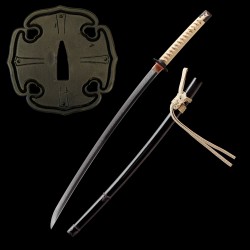
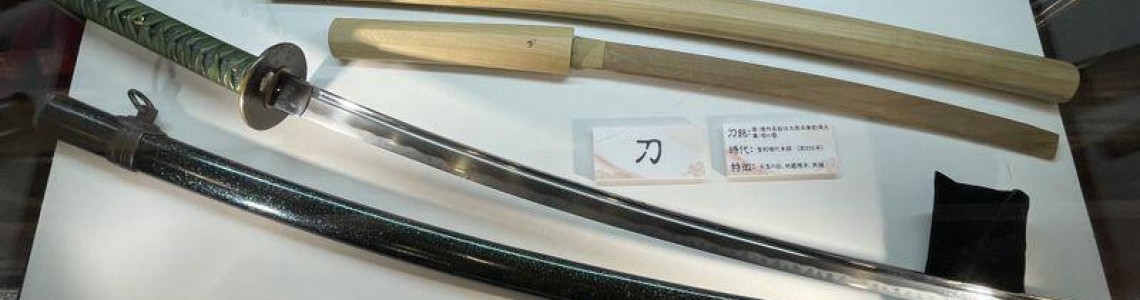
At first glance, a Handachi-Style Katana may look almost identical to a traditional Katana. Both can have a curved single-edged blade, a tsuba, a wrapped tsuka, and a saya. However, the most important difference is usually found in the mounting style and fittings rather than in the basic blade itself.
The word Handachi (半太刀) is commonly translated as “half-tachi.” Historically, Handachi refers to a hybrid mounting style that combines elements associated with Tachi mountings and Katana-style wearing. In general, a Handachi mounting is worn with the cutting edge facing upward like a Katana, while incorporating distinctive Tachi-style fittings.
What Is a Standard Katana?
Before looking at Handachi-style swords, it is important to understand what people normally mean when they say “Katana.”
A Katana is a Japanese single-edged sword traditionally associated with the uchigatana style of wearing. The sword is normally inserted through the obi with the cutting edge facing upward. This orientation became strongly associated with the Samurai sword during later Japanese history.
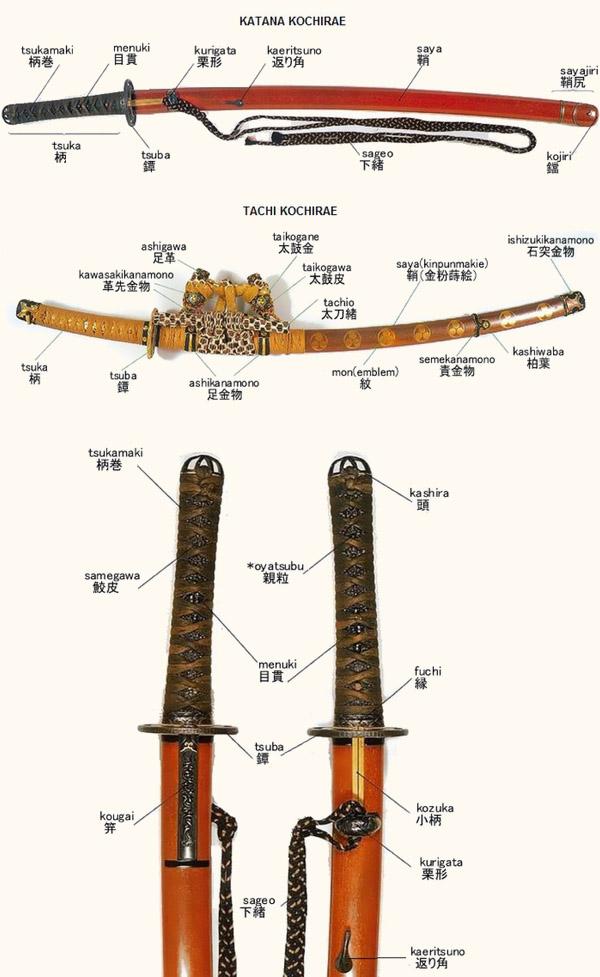
A traditional Katana mounting, known as Katana koshirae or uchigatana koshirae, generally includes components such as:
- Tsuka: The handle of the sword.
- Tsuba: The sword guard.
- Fuchi: The collar fitting at the base of the handle.
- Kashira: The pommel fitting at the end of the handle.
- Menuki: Decorative and functional grip ornaments beneath the wrapping.
- Samegawa: Rayskin covering traditionally used beneath the handle wrapping.
- Tsuka-ito: The cord or leather wrapping around the handle.
- Saya: The scabbard.
- Sageo: A cord attached to the saya for securing the sword to the obi.
The exact materials, decoration, and construction can vary considerably. Modern Katana may feature traditional Japanese-inspired fittings, historical reproductions, or completely customized designs.
What Is a Handachi-Style Katana?
Handachi literally means “half-tachi.” The name reflects its position between traditional Tachi and Katana mounting traditions.
A Handachi-style sword generally uses the wearing orientation of a Katana while incorporating Tachi-inspired fittings. In other words, it combines the practical carrying method associated with the Katana with the visual character of a Tachi.
This is why a Handachi-Style Katana can look different from an ordinary Katana even when the blade itself is constructed in essentially the same general form.
The distinction is especially important for modern sword buyers. When a modern sword is described as a Handachi-Style Katana, the name often describes the mounting and fitting design rather than suggesting that the blade is a completely different category of Japanese sword.
Handachi vs Katana: The Main Difference
| Feature | Standard Katana | Handachi-Style Katana |
|---|---|---|
| Basic blade form | Katana-style single-edged blade | Often uses a similar Katana-style blade |
| Wearing orientation | Generally edge-up | Generally edge-up |
| Mounting influence | Katana / uchigatana | Combination of Katana and Tachi elements |
| Scabbard fittings | Typical Katana fittings | Often features Tachi-inspired fittings |
| Pommel | Usually Kashira-style fitting | May use a Tachi-inspired Kabuto-gane or related fitting |
| Overall appearance | Classic Katana appearance | More Tachi-inspired and formal appearance |
| Primary distinction | Katana mounting system | Hybrid mounting style |
The most important point is that Handachi is not simply a longer or heavier Katana. The defining characteristic is primarily the relationship between the sword and its mounting.
Why Does a Handachi Look Like a Tachi?
To understand the appearance of a Handachi, it helps to look at the historical development of Japanese sword mountings.
The Tachi was traditionally worn suspended from the belt with the cutting edge facing downward. Its mounting system used fittings that allowed the sword to hang from the waist. Tachi mountings could be highly elaborate, particularly for formal or ceremonial swords.
The Katana and uchigatana style developed a different method of carrying the sword. Instead of suspending the sword edge-down, it was inserted through the obi with the cutting edge facing upward.
Handachi represents a combination of these traditions. It retains the Tachi-inspired visual language while adopting the Katana-style wearing orientation.
This hybrid character is exactly why the term “half-tachi” is so appropriate.
Handachi vs Tachi: They Are Not the Same
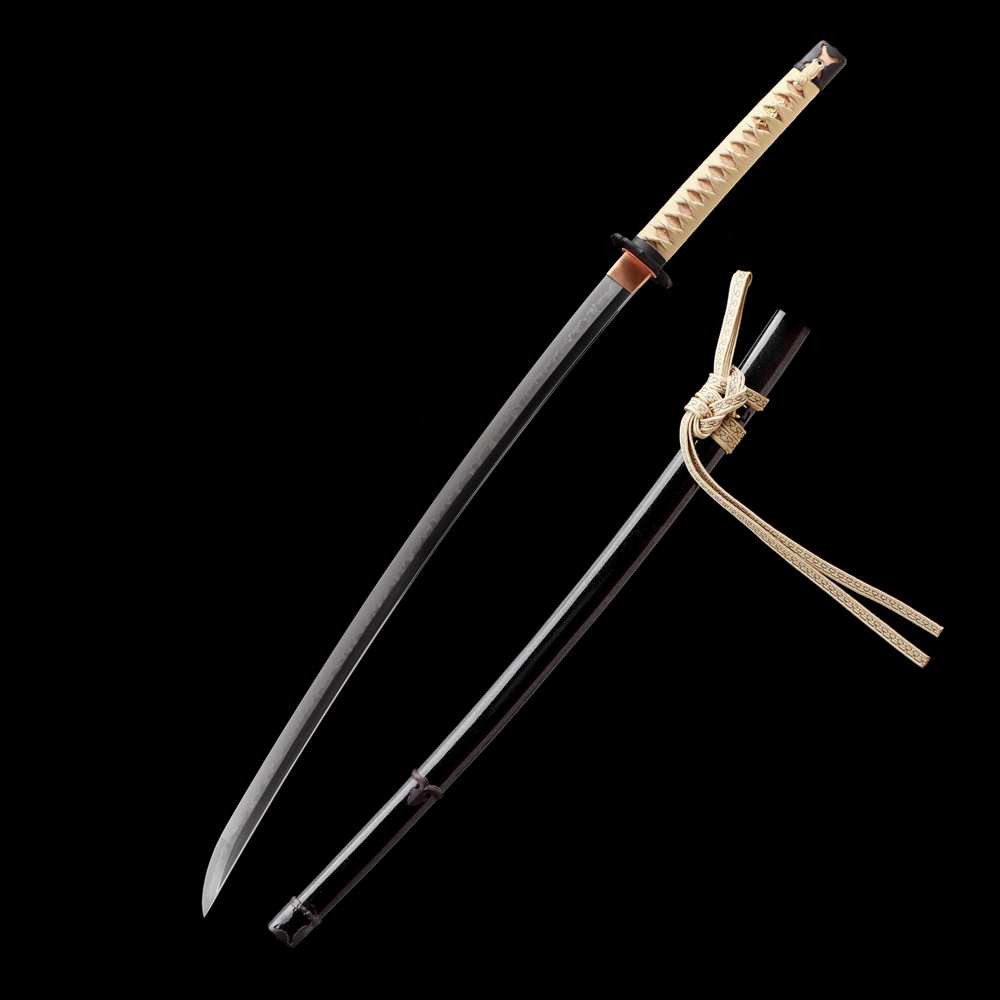
Another common mistake is assuming that a Handachi-Style Katana is simply another name for a Tachi. They are related, but they should not be treated as identical.
| Feature | Tachi | Handachi | Katana |
|---|---|---|---|
| Traditional wearing direction | Edge-down | Generally edge-up | Edge-up |
| Mounting influence | Tachi | Tachi + Katana | Katana / uchigatana |
| Scabbard suspension | Traditional suspension fittings | Katana-style carry with Tachi-inspired fittings | Inserted through the obi |
| Overall appearance | Classic Tachi appearance | Hybrid appearance | Classic Katana appearance |
Therefore, it is more accurate to think of Handachi as a hybrid mounting tradition rather than as a completely separate blade shape.
The Most Noticeable Handachi-Style Fittings
The easiest way to recognize a Handachi-style sword is often to look at the fittings rather than the blade.
1. Kabuto-gane
One of the most recognizable features associated with Handachi-style mounting is the use of a Kabuto-gane or a similar Tachi-inspired pommel fitting. This gives the end of the handle a more substantial and traditional Tachi-like appearance.
2. Tachi-Inspired Saya Fittings
The saya of a Handachi-style sword may feature metal fittings inspired by Tachi mounting traditions. These can include fittings around the scabbard and suspension-related components that visually distinguish the sword from a standard Katana.
3. More Formal Visual Character
Handachi-style mountings often have a more formal, traditional appearance. Decorative metalwork, larger fittings, and Tachi-inspired details can create a visually substantial sword even when the underlying blade is similar to a conventional Katana.
4. A Different Balance of Traditional Elements
A standard Katana mounting tends to present a unified uchigatana appearance. A Handachi mounting deliberately introduces older Tachi-inspired elements, creating a visual bridge between two historical traditions.
Does a Handachi-Style Katana Have a Different Blade?
Not necessarily.
This is one of the most important points for modern sword buyers. The term “Handachi” primarily describes the mounting style. It does not automatically mean that the blade must have a special steel, special hamon, unique cross-section, or specific blade length.
For example, a modern Handachi-style sword may use:
- T10 steel
- 1095 steel
- Folded steel
- Clay-tempered construction
- Oil-quenching
- Different hamon patterns
- Different blade geometries
- Different polishing styles
These specifications describe the blade and manufacturing process, while Handachi describes the mounting concept. Therefore, the steel type and Handachi classification are two different categories of information.
Can a Handachi-Style Katana Have a Hamon?
Yes. A Handachi-style sword can have a genuine hamon just like a conventional Katana.
The hamon is related to the blade's heat-treatment and hardening process rather than the mounting style. Depending on the sword, a Handachi-style Katana may feature hamon patterns such as Choji, Notare, Gunome, Midare, or other designs.
This means that terms such as “T10 steel,” “clay tempered,” “genuine Choji hamon,” and “Handachi-style” describe different aspects of the same sword:
- T10 steel describes the blade material.
- Clay tempering describes the heat-treatment process.
- Choji hamon describes the visible hardened pattern.
- Shinogi-zukuri describes the blade geometry.
- Handachi-style describes the mounting concept.
How to Tell a Handachi-Style Katana from a Standard Katana
If you are looking at photographs of a Japanese-style sword and want to determine whether it is a standard Katana or a Handachi-style sword, start with the fittings.
Step 1: Look at the End of the Handle
Check the pommel area. A standard Katana normally has a kashira, while a Handachi-style mounting may use a more Tachi-inspired fitting such as a kabuto-gane.
Step 2: Examine the Saya
Look at the fittings around the scabbard. Tachi-inspired metal fittings are one of the strongest visual clues that the sword is using a Handachi-style mounting.
Step 3: Check the Wearing Orientation
A traditional Tachi is normally worn edge-down, while Katana-style and Handachi-style mountings are generally associated with edge-up wearing. This is an important distinction between Tachi and Handachi.
Step 4: Do Not Judge Only by Blade Shape
The blade alone may not tell you whether a sword is Handachi-style. Two swords with very similar blades can have completely different mounting styles.
Step 5: Look at the Whole Mounting
The safest approach is to examine the complete koshirae rather than relying on a single fitting. Handachi is defined by the combination of mounting characteristics, not by one universal component found on every example.
Why Do Some Modern Swords Use the Name “Handachi-Style Katana”?
Modern sword manufacturers and collectors often use the term Handachi-Style Katana because it immediately communicates two important ideas: the sword has a Katana-like blade and wearing orientation, but the fittings are inspired by Tachi traditions.
For customers who are familiar with standard Katana, the term also makes the design easier to understand. It indicates that the sword is not simply a conventional Katana mounting, even though the blade may have many familiar Katana characteristics.
However, terminology used for modern reproduction swords is not always as standardized as historical Japanese sword terminology. A product described as “Handachi-style” should therefore be evaluated by looking at its actual fittings and construction rather than relying on the name alone.
Handachi-Style Katana vs Katana: Which One Is More Traditional?
The answer depends on what aspect of Japanese sword tradition you are referring to.
A standard Katana represents the well-known uchigatana-style mounting tradition. A Handachi-style sword, on the other hand, intentionally incorporates elements associated with the older Tachi tradition.
Therefore, a Handachi-style mounting can be particularly appealing to people who appreciate the visual connection between the earlier Tachi tradition and the later Katana tradition.
Neither term automatically tells you whether a sword has a better blade, better steel, better heat treatment, or better craftsmanship. Those qualities must be evaluated separately from the mounting style.
Common Misunderstandings About Handachi-Style Katana
Misunderstanding 1: Handachi Is a Completely Different Blade Type
Not necessarily. Handachi primarily refers to a mounting style. A Handachi-style sword can use a blade that is otherwise very similar to a conventional Katana.
Misunderstanding 2: Handachi Is the Same as Tachi
No. Tachi are traditionally worn edge-down and suspended from the belt. Handachi combines Tachi-inspired fittings with a Katana-style wearing method.
Misunderstanding 3: Handachi Must Be Longer Than a Katana
No. There is no universal blade-length rule that makes a sword Handachi. The defining feature is the mounting style.
Misunderstanding 4: Handachi Must Have a Specific Hamon
No. Hamon design is a separate characteristic of the blade and heat-treatment process.
Misunderstanding 5: Any Sword with Tachi-Looking Fittings Is a Tachi
Not necessarily. A sword may have Tachi-inspired fittings while being designed to be worn in the Katana manner. This is one of the defining ideas behind Handachi mounting.
Why Handachi-Style Katana Are Popular Today
Handachi-style swords have a distinctive visual identity. They offer an interesting combination of the familiar Katana silhouette and the more elaborate appearance associated with Tachi-inspired fittings.
For collectors and sword enthusiasts, this makes Handachi-style mounting an attractive choice when they want something that looks different from a conventional Katana while remaining clearly connected to Japanese sword traditions.
The style can also work particularly well with traditional decorative themes, including family crests, dragons, floral patterns, geometric designs, and other Japanese-inspired metalwork.
How to Choose Between a Standard Katana and a Handachi-Style Katana
When choosing between the two, it is useful to separate the blade specifications from the mounting style.
| If You Prefer... | Consider |
|---|---|
| The classic Japanese sword appearance | Standard Katana mounting |
| A more distinctive Tachi-inspired appearance | Handachi-style mounting |
| Traditional Katana-style fittings | Katana koshirae |
| Tachi-inspired metal fittings with Katana-style wearing | Handachi koshirae |
| A particular steel or hamon | Evaluate blade specifications separately |
In other words, choosing a Handachi-style sword does not mean giving up the blade characteristics you want. You can evaluate steel, blade geometry, heat treatment, hamon, polishing, fittings, and customization as separate parts of the sword.
Final Thoughts: Handachi-Style Katana vs Katana
The easiest way to remember the difference is this:
A standard Katana uses Katana-style mounting, while a Handachi-Style Katana combines a Katana-style wearing method with Tachi-inspired fittings.
The blade itself may be very similar between the two. The major visual distinction is found in the koshirae—especially the handle-end fittings, scabbard fittings, and overall Tachi-inspired design.
This is also why a Handachi-style sword should not automatically be classified as a Tachi simply because some of its fittings look like Tachi fittings. The hybrid nature of Handachi is precisely what makes the style unique.
For anyone interested in Japanese swords, understanding this distinction makes it much easier to read product descriptions, compare different koshirae, and appreciate how Japanese sword mounting evolved from the Tachi tradition toward the Katana.
Frequently Asked Questions About Handachi-Style Katana
Is a Handachi the same as a Katana?
Not exactly. Handachi generally refers to a hybrid mounting style that combines Tachi-inspired fittings with a Katana-style wearing method. A Handachi-style sword can have a blade that is very similar to a conventional Katana.
Is Handachi the same as Tachi?
No. Traditional Tachi are normally worn edge-down and suspended from the belt. Handachi-style mountings are generally worn edge-up like a Katana while incorporating Tachi-inspired fittings.
Does a Handachi have to use a special type of steel?
No. Handachi describes the mounting style, not the steel type. A Handachi-style sword can be made from different types of carbon steel or other materials depending on its construction.
Does a Handachi need to have a hamon?
No. Hamon is a characteristic of the blade and its heat-treatment process. It is independent of whether the sword uses standard Katana or Handachi-style mounting.
Why is it called “Handachi”?
Handachi (半太刀) is commonly translated as “half-tachi.” The term reflects its hybrid character: it incorporates elements of Tachi mounting while using a Katana-like method of wearing the sword.
How can I recognize a Handachi-style Katana?
Look at the fittings rather than only the blade. Tachi-inspired pommel and scabbard fittings are important visual clues. However, the exact configuration can vary, so the complete koshirae should be considered.
Is a Handachi-style Katana longer than a normal Katana?
Not necessarily. There is no universal blade-length requirement that defines a Handachi. The main distinction is the mounting style.
Related Products